- Mar 14, 2025
GUEST POST: States With the Most and Least Mental Health Support in the US
- Em King
- mental health, US
- 0 comments
Michael Villarreal is a Certified Alcohol and Drug Counselor and CEO at Tres Vistas Recovery. With over a decade of experience in substance abuse treatment, senior care, and medical services, Michael is a dedicated leader in the addiction recovery and healthcare industries.
Imagine living in an environment where getting help for mental health issues is like searching for water in the desert. Doesn't sound great, does it? Now, imagine having to go to another state to find a place for mental health support. Not easy at all. Believe it or not, this is the reality for millions of American women.
A new study from Tres Vistas Recovery has pulled back the curtain on America's mental healthcare landscape, revealing a patchwork system where your zip code might matter more than your needs.
A Tale of Two Americas
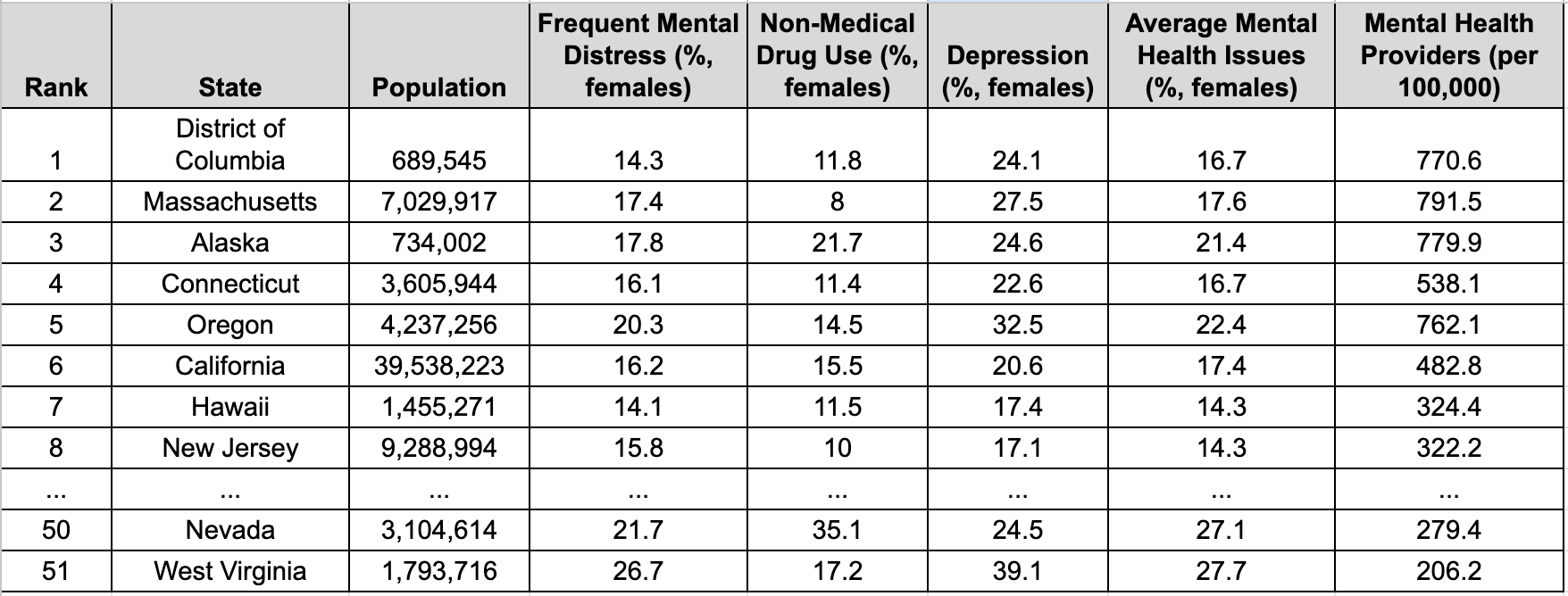
Take two very contrasting situations: The District of Columbia could be said to be a mental health haven for women. There are 770.6 providers per 100,000 people, and 16.7% of the people living there say they have mental health issues. A great statistic! On the other hand, things are completely different for women in West Virginia. There are 206.2 providers per 100,000 people, and the data shows that 27.7% of them have mental health issues and 39.1% face depression. So, in places like West Virginia, women wait months to get the care they need Nevada's story is even more complicated. Here, more than one-third of women (35.1%) report non-medical drug use—the highest rate in the nation—creating a desperate need for support that simply isn't meeting demand.
The Hidden Costs
These numbers are about lives, and it is our responsibility as a society to work to improve mental health by creating an environment where women feel safe to seek help without fear of judgment. By investing in preventative measures, we can make a real difference and foster a healthy future for women across the country!
Behind these numbers are real women making impossible choices. Some drive hours for therapy appointments. Others wait months for an opening with the only psychiatrist in their county. Many people just give up, letting discrimination, harassment, and everyday stresses get worse without getting professional help. We're watching temporary challenges morph into chronic conditions right before our eyes, and it's happening precisely where women have the fewest resources to prevent it.
Bright Spots on the Map
The situation is not bad for everyone. States like Massachusetts and Alaska boast robust provider availability (791.5 and 779.9 per 100,000, respectively), while Alabama lags far behind with just 152.2 providers per 100,000 people. The extremely low rates of mental distress (14.1%) and depression (17.4%) in Hawaii are truly remarkable. These success stories aren't accidents—they're the result of deliberate investments in removing stigma, expanding provider networks, and creating women-centered support systems.
The truth is that no woman's well-being should depend on which side of a state line she calls home. There are many obstacles and opportunities in the world of women's mental health care in the United States. The blueprint is already there in our success stories—the abundance of providers in DC, the prevention success in Hawaii, the accessibility model in Massachusetts. Imagine a world where a single mother from Nevada, who already feels alone in her mental health struggles, doesn't have to choose between her numerous responsibilities and her mental health struggles. Or consider a woman from West Virginia, who has been on a waiting list for weeks to see a psychiatrist for her depression; how nice it would be if she could get professional help faster.
Women don't need a miracle to shine in well-being. They need a strong network where each of them, no matter where they live, can get mental health support. This is not just an aspiration—it is a real need for the millions of American women who are waiting for help that should not be limited by geography.